From Manchester to Number 10? What Andy Burnham’s Labour Leadership Bid Means for the North West
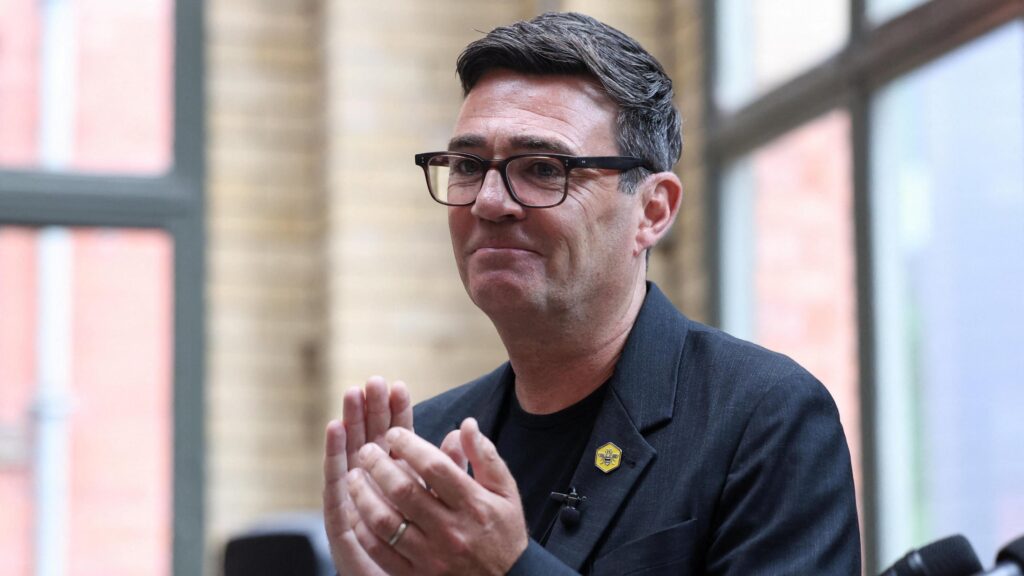
There is a moment, in every political career, when the trajectory shifts from possible to probable. For Andy Burnham, that moment came on a Monday morning in Manchester, standing at a podium in the People’s History Museum — a venue chosen, one suspects, with considerable deliberation — and telling the country that Westminster is broken.
He has said versions of this before, of course. He said it during the Covid pandemic when he stood in front of cameras on the steps of Manchester Town Hall and refused to accept a settlement that would have thrown hundreds of thousands of North West workers into financial freefall without adequate support. He said it during the floods, the knife crime debates, the homelessness crisis he made his personal mission as Mayor. Andy Burnham has been saying Westminster is broken for the better part of a decade. The difference now is that he is about to go and fix it himself.
How we got here
The story of how Burnham got from the Mayoralty of Greater Manchester to the threshold of Downing Street in the space of a few extraordinary weeks is one of the most remarkable episodes in recent British political history — and one that has its roots firmly in the North West.
Burnham had been the most popular senior Labour figure in the country for the better part of a year before Starmer finally fell. Two polls in 2025 had found that 62% of Labour members would prefer him to the incumbent Prime Minister, and that among prospective leaders he commanded 43% of first preferences — more than four times the support of his nearest rival. The writing, as they say, had been on the wall for some time.
What accelerated everything was the May 2026 local election results. Labour lost control of more than 35 councils and nearly 1,500 councillors — roughly 60% of the seats it was defending — in what the BBC described as the single largest loss of local councillors the party had suffered in a single election. Reform UK and the Greens made historic gains. Wales, which had been Labour-governed for a century, fell to Plaid Cymru. The party’s national vote share collapsed to 17% — level with the Conservatives, a governing party that had been reduced to rubble at the 2024 general election.
After that, Starmer’s position was untenable in all but name. On 22 June, the same day Burnham was sworn in as the Member of Parliament for Makerfield — a seat that exists today only because Josh Simons resigned it specifically to create a vacancy through which Burnham could return to Parliament — the Prime Minister announced his resignation.
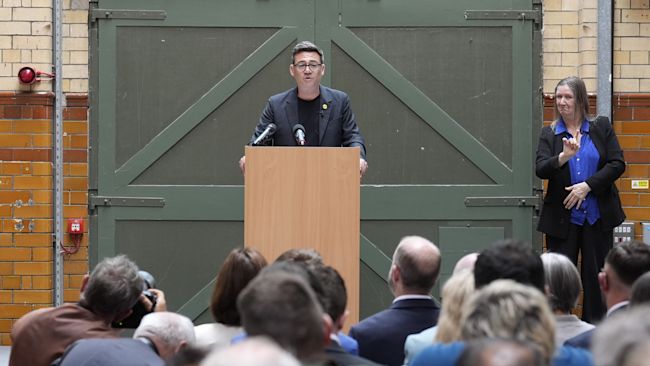
“No 10 in the North”
Burnham’s first major speech as a leadership candidate was delivered not in London but in Manchester. That choice was not incidental. It was a statement.
The centrepiece of his pitch was a proposal he called “No 10 North” — an extended Downing Street operation based in Manchester, designed to serve as what he described as “the nerve centre of a rewired Britain.” The language was deliberately bold. This was not a politician promising to give the regions slightly more say over their affairs. This was a politician promising the biggest transfer of power out of Whitehall in modern times.
“Westminster has not been working for people,” he said, “and it is time to do things differently.” He spoke of “good growth in every British postcode.” He talked about ten years of fighting the Whitehall machine, blocking Manchester’s progress, and said he was simply not prepared to accept the same for any area of the country.
For the North West, the implications of a Burnham premiership are significant in ways that go beyond the symbolic. He knows this region. He knows its transport infrastructure because he built the Bee Network. He knows its public health challenges because he has been grappling with them since 2017. He knows where the money has been denied and where the investment has fallen short, because he has spent the best part of a decade making those arguments in rooms full of ministers who were not always listening.
What it means for Greater Manchester
The question being asked in every council chamber and business meeting across the North West this week is a simple one: if Burnham goes to Downing Street, who leads Greater Manchester?
There is, as yet, no clear answer. The 2026 Greater Manchester mayoral by-election is scheduled for 30 July — a date that now carries rather more weight than it did when it was announced. The race to succeed Burnham will be one of the most consequential local elections the region has held in years, at a moment when the city-region sits in an unusually prominent position in the national political conversation.
Beyond the succession question, the implications of a Burnham leadership for Greater Manchester’s relationship with central government are potentially transformative. His proposal to extend devolution — to give places like Manchester, but also Dundee, Bangor, Bristol and Birmingham, a genuine say over the decisions that shape them — reflects a governing philosophy he has been developing and testing for nearly a decade. The Bee Network, the Greater Manchester Homelessness Programme, the approach to public health — these were not just local initiatives. They were proof-of-concept exercises for a different way of doing government.
If he gets to Downing Street, he will arrive not as a politician with an abstract theory of devolution but as a practitioner who has run one of the largest city-regions in the country for nine years and knows exactly what a more devolved settlement would look like in practice.
The challenges ahead
None of this is without risk, and it would be dishonest not to acknowledge it.
Burnham is on the cusp of what some are already calling a coronation — the only declared candidate, with more than 200 Labour MPs behind him, and the man most likely to have challenged him, Wes Streeting, having offered his endorsement almost immediately after the starting gun was fired. That is an extraordinary position of strength. It is also, potentially, a source of fragility. A leader who arrives without a contested election carries no mandate from the membership and risks the accusation — already being levelled by Reform UK — of exercising power without accountability.
He has also been criticised for refusing to answer questions from journalists in the days following his speech. His allies say this is sensible discipline. His critics say it is evasion. The distinction matters, because the scrutiny that awaits any prospective Prime Minister is of a different order of magnitude from the scrutiny that comes with running a city-region, however prominent.
And then there is the question of the broader political landscape. Reform UK, which made sweeping gains in May and is now calling for an immediate general election, will not simply melt away because Labour has changed its leader. The Conservatives, under Kemi Badenoch, have already taken aim at what she described as Burnham’s “mistaken beliefs.” The battle for the political centre of gravity in post-Brexit Britain is far from over.
A North West story
Whatever happens next — whether Burnham glides to the leadership unopposed or faces a late challenger, whether his No 10 North proposal survives contact with Whitehall reality or is watered down beyond recognition — this is, at its heart, a North West story.
A boy from Aintree, educated in Newton-le-Willows, who joined the Labour Party at fifteen. A politician who spent sixteen years as an MP before choosing to go to Manchester and govern it — and who discovered, in doing so, a version of politics that the rest of the country is now looking at with considerable interest.
He stood on the steps of the People’s History Museum this week and promised to lift Britain up. The North West, which has been making that argument about itself for the better part of a century, will be watching very closely to see if he means it.