Manchester Named the World’s Most Sustainable University
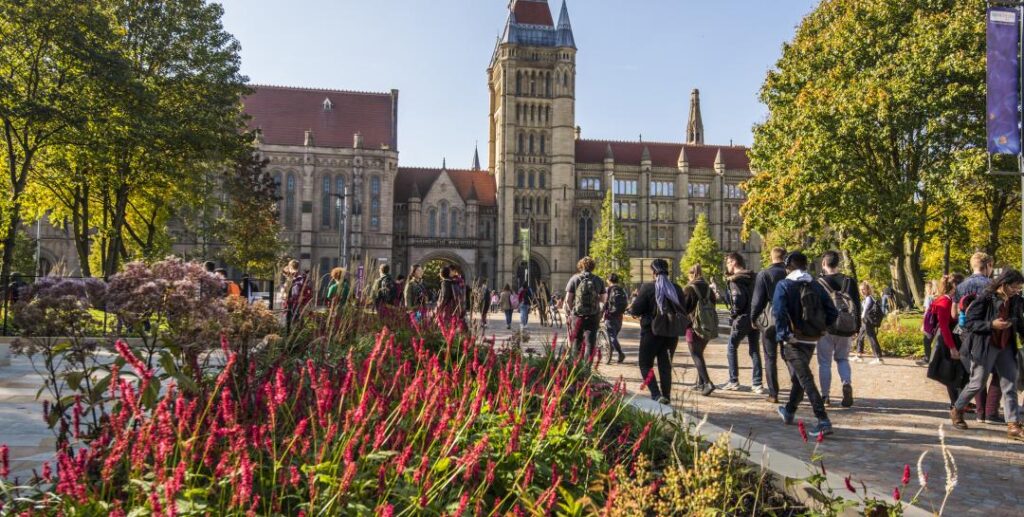
Manchester Named the World’s Most Sustainable University — Despite Sitting 40th in the QS Rankings
There is an interesting tension at the heart of this week’s higher education news that is worth dwelling on for a moment.
The University of Manchester has been ranked first in the world for progress towards the United Nations Sustainable Development Goals in the Times Higher Education Sustainability Impact Ratings — the most rigorous global assessment of how universities are addressing the planet’s most pressing challenges. First. Out of more than 1,600 institutions across 114 countries.
And yet, in the QS World University Rankings — the table most people reach for when they want to know how good a university actually is — Manchester sits 40th globally.
That gap tells you something rather important, not just about Manchester, but about what we measure when we measure universities, and what we perhaps should be measuring instead.
What the ranking measures
The Times Higher Education Sustainability Impact Ratings are not a popularity contest, and they are not a measure of how pleasant a campus looks or how many recycling bins are in the library. They assess how universities are helping to address major global challenges through their research, teaching, operations and partnerships, measured against the 17 UN Sustainable Development Goals.
Those goals — covering everything from climate action and clean energy to reduced inequality, sustainable cities and the protection of ecosystems — represent arguably the most comprehensive framework ever devised for measuring whether an institution is actually doing something useful for the world.
Manchester finished top outright in three individual tables — SDGs 11 (sustainable cities and communities), 12 and 15 — and joint first for SDG 9 and SDG 14, giving it more top ten places than any other institution in the entire ranking.
It is also the eighth consecutive year that the University has ranked in the global top ten — the only institution in the world to achieve that distinction since the rankings were launched in 2019.
What the 40th place QS ranking actually tells us
This is where it gets interesting. The QS World University Rankings measure things like academic reputation, employer reputation, research citations and international diversity. These are not trivial metrics. A university that scores well across all of them is genuinely doing something right.
But they measure prestige and research output more than they measure impact. A university can publish thousands of highly cited papers, attract brilliant academics from around the world and maintain an impeccable reputation among employers — and still make very little tangible difference to the communities around it or to the global challenges it claims to care about.
Manchester’s position — 40th in QS, first in sustainability impact — suggests a university that has made a deliberate choice about where to direct its energy. Not at the metrics that generate prestige, but at the ones that generate change.
Phil Baty, Chief Global Affairs Officer at Times Higher Education, described Manchester’s performance as “truly exceptional,” noting that the university had submitted for rigorous assessment across every single one of the 17 UN Sustainable Development Goals. “This reveals a deep, institutional commitment to real-world social and economic impact, across a vast and diverse array of core sustainability issues, from decent work and economic growth through to climate and environmental action.”
What it means for Greater Manchester
I keep coming back to the local angle because it is the one that matters most to readers of this newspaper.
Greater Manchester’s universities contribute more than £4 billion to the regional economy every year, educate more than 125,000 students and employ more than 20,000 staff. The University of Manchester is the largest and most research-intensive of those institutions, and its presence shapes the city in ways that go far beyond the boundaries of its Oxford Road campus.
When the world’s most sustainable university sits in the middle of your city, that status attracts researchers, funding, spinout companies and talent in sustainability-related fields that would otherwise locate elsewhere. The University of Manchester Innovation Factory has been central to propelling spinouts and patented work related to industry, innovation and infrastructure — and those spinouts create jobs and economic activity across the wider region.
Professor Duncan Ivison, President and Vice-Chancellor of the University of Manchester, said: “At a time of rapid technological, environmental and social change, universities have never been more important. They help prepare people for the future, advance understanding through research, and work with partners to turn ideas into real improvements in people’s lives.”
That is not marketing language. It is a description of what the sustainability rankings are actually measuring — and what Manchester, by sitting at the top of them, has demonstrated it is actually doing.
A different kind of number one
The QS rankings will always attract more headlines. They are older, more familiar and more widely understood. When a university moves up or down in the QS table, vice-chancellors issue statements and students recalibrate their choices.
But the sustainability rankings measure something that will matter more with every passing year — whether universities are genuinely contributing to solutions for the problems the world actually faces. Climate change, inequality, sustainable cities, clean water, biodiversity loss. These are not abstract concerns. They are the conditions under which the next generation of Manchester students will live their lives.
That the institution responsible for educating them sits at the very top of the global table for addressing those challenges is, I think, more significant than its position in any prestige ranking.
Manchester: 40th in the world for reputation. First in the world for doing something about it.